Mission Rabies Tanzania 2025 - Dogs, Cows, and a Hike up Mount Everest
- Arnold Plotnick

- Dec 28, 2025
- 4 min read
The penultimate day of the campaign — and it started with excitement: our own van. I’d secretly hoped we’d keep the old one (and, more importantly, its driver, good ol’ Noel), but alas, we got the new wheels and driver. Still, it felt luxurious not to be shoulder-to-shoulder for once. We also had a special guest: Fran, our fearless leader, joined our team for the day.
First stop: the local hospital. Yesterday, Elsa got a superficial scratch from a squirmy cat, and rules are rules — if the skin’s broken, you get a rabies shot. We first tried the pharmacy, but the pharmacist bristled when told that rabies vaccines for people are supposed to be free. After a few stubborn exchanges, we were redirected next door to the hospital. There, Fran explained it again, and while one staffer understood, her coworker did not. “It’s important that everyone here knows that the rabies vaccines for people are free”, she told them. If one person here doesn’t realize this, and the misinformation about the cost could easily make someone decline treatment, with tragic consequences.
With Elsa safely vaccinated, we hit the road. Six people, room to breathe, windows down – this is what a van ride is supposed to be. Half an hour later we arrived in the village of Ilkirevi, where we’d roamed the week before. This time we’d be going door-to-door. We parked in a dusty field in the center of town, and I began my day by discreetly urine-marking my territory, twenty feet from an unimpressed cow.
Door-to-door work means following the GPS carefully, tracing every path in the grid. It’s physically demanding, with less of the “instant gratification” than the static clinics, but easily the most fascinating. At the static clinics, the scenery never changes. Going door-to-door, you see village life up close — the backyards, the makeshift gardens, the improvised architecture.

It may look like we’re there promoting public health (and we are), but I’m there as a fascinated visitor, seeing the culture in as authentic a fashion as you can get. As a photographer, it’s a constant temptation to whip out the iPhone and capture every second. But I have to remind myself: the post-project Zanzibar trip will be for photography. Tanzania is for vaccinations.

We started down the first “street” — really a narrow dirt path — and spotted a dog asleep in the sun on a concrete slab. Assuming he was a stray, we decided on a stealth jab. I crept up, needle ready, and got him in the leg before he even stirred. He bolted after the poke, so no real chance to mark him. Moments later, a man appeared with another dog, and wouldn’t you know it, the sleeping one was his. The runaway had trotted straight to his owner’s side, giving us the perfect second chance to mark his head. The universe sometimes aligns, even in Arusha.
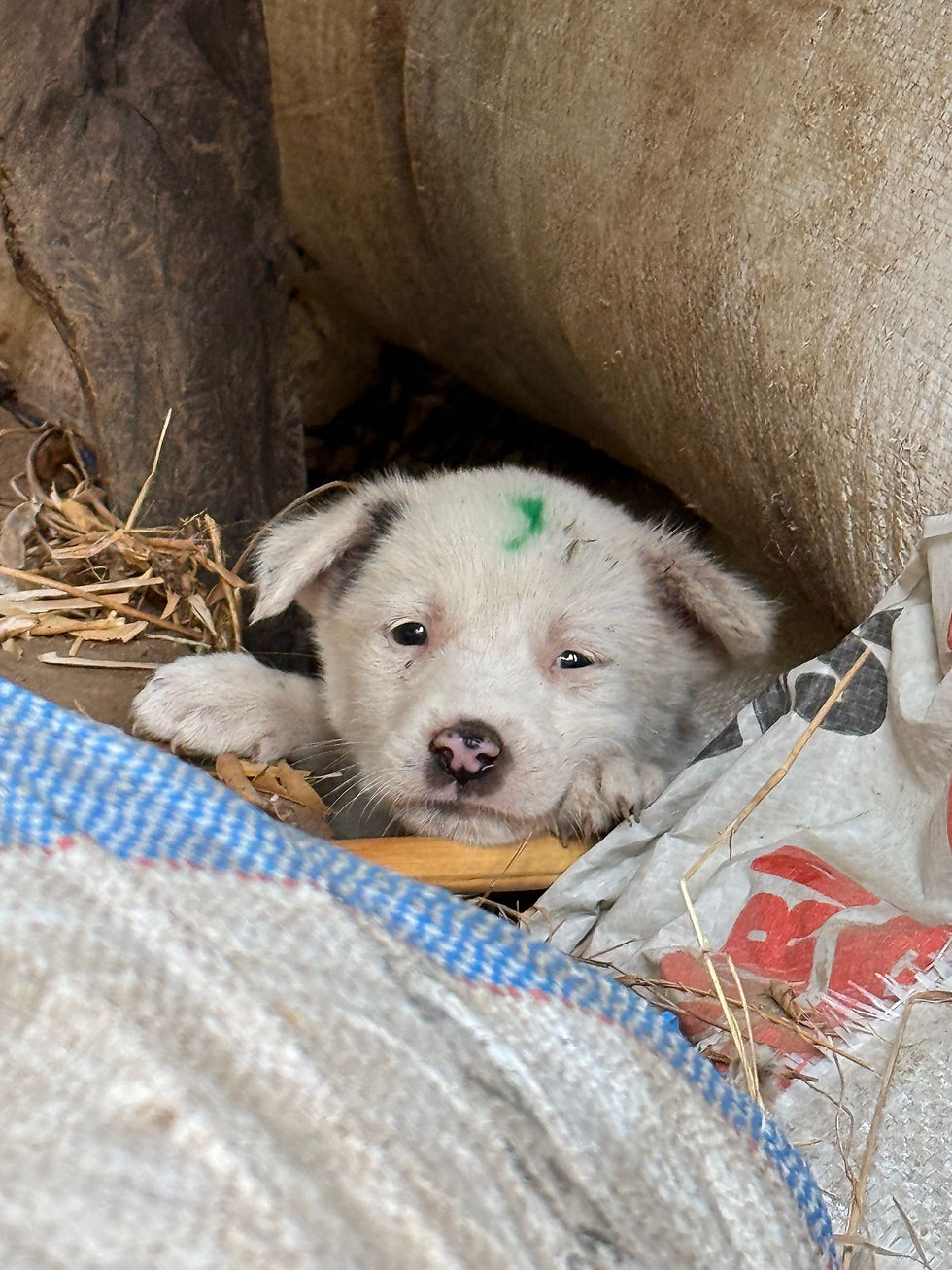

Later that morning, we visited a family with a mother dog, a pile of puppies, and two beautifully kept cows. One older family member had clearly started drinking early and was weaving around like a cartoon cliche. The owner laughed and told us he’d gladly give away a cow to whoever married the guy and took him off their hands. He looked at Elsa first, then at me. Desperate times.

After lunch came the day’s highlight — and workout. A local man with excellent English attached himself to our team, pointing out houses where dogs still needed vaccination. He gestured toward one home “up there” and pointed at what looked like a near-vertical trail. There was some debate about sending a smaller scouting party, but pride (and stubbornness) won out. At sixty-five, with creaky knees and a rebellious rotator cuff, I wasn’t about to be the one left behind. I gazed up at Mount Everest again and we started climbing.
The path was brutal — steep, winding, and seemingly endless. When we finally hit a clearing, the view was spectacular, and we paused for a triumphant selfie.

Then it was back to work. At the top sat a lone house that looked like something from The Blair Witch Project, maybe slightly less haunted. Behind it was a small shed with a dog inside, peering out from behind chicken wire.

The shed door was secured with a heavy Master lock — impenetrable. The dog was young and friendly but clearly starved for attention.

I could see through the wire his metal water dish: empty. Our local guide found a gap in the wire, reached through, and managed to briefly immobilize the dog and lift a bit of the dog’s skin. Elsa slipped the vaccine in, I marked the head, and he was added to our growing list. Then we turned to the empty water bowl. I had a small bottle in my bag, so I had the local guy do the pouring. His arm was longer and thinner and it fit through a gap in the wire. He started pouring while I told him where to aim. When we heard the splash and saw the dog start drinking, it felt like another small victory. The local man assured us that he knows the owner and that she would be back tonight. This is Tanzania, and you have to just take things on faith. A sad situation, yes, but at least we left him a little better off than before.

By late afternoon, we got word our van’s brakes had failed. Our driver was getting them repaired, which meant hiking all the way back to meet him rather than him just picking us up. A major trek. We stopped at a small shop for water — six 1.5-liter bottles — three of which Fran hoisted into her backpack without blinking. The woman’s made of steel. We reached the van just as the repair wrapped up. Perfect timing.
Our final count was in the mid-30s — modest but respectable. From the chatter, it sounded like we were near the top of the pack again. A long, tough, memorable day. Tomorrow, the campaign wraps up.


Comments