Mission Rabies Peru: Boots on the Ground
- Arnold Plotnick

- Jul 15
- 5 min read
Day One
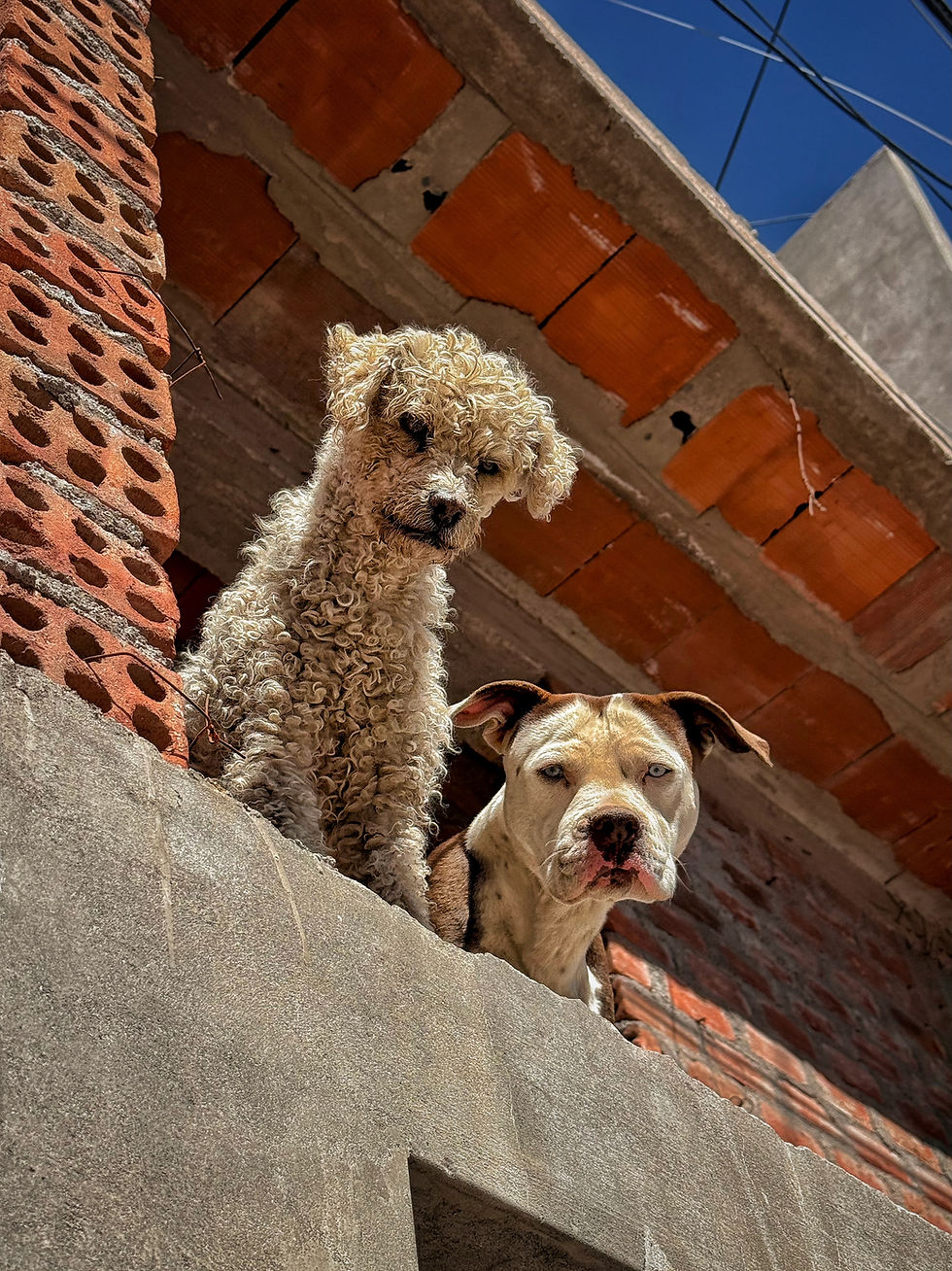
Well, Day One of Mission Rabies' very first vaccination campaign in Peru is officially in the books. Before I tell you what happened today, a little background.
When people think about canine rabies, they usually think of Africa or Asia, and for good reason. South America has done a remarkable job controlling the disease over the past few decades. Peru had largely eliminated it... until vaccination rates slipped in Arequipa a few years ago. Cases climbed again before being brought back under control.
The bigger problem now lies just across the border. Bolivia is currently the only country in South America where canine rabies remains endemic, and infected dogs occasionally make their way into Peru, either by roaming across the border or accompanying their owners.
That makes Arequipa the front line. Our goal is to vaccinate at least 80% of the dogs in the highest-risk neighborhoods. If you vaccinate enough dogs, the virus comes under control. If this campaign proves successful, Mission Rabies hopes to expand into Bolivia.
This project is also quite different from the ones I've worked on in Tanzania and Ghana. Instead of pairing international volunteers together, each of us is teamed with an experienced local vaccination worker. The volunteers are divided into two groups: the Condors and the Pumas. (I'm a Condor.)

Each team consists of exactly two people. That's it. My teammate is the registradora, responsible for entering every vaccination into Mission Rabies' brand-new iPhone app.
I'm the vacunador. The guy with the syringe.
So, last night I set my alarm for 5:30. My brain was apparently more excited than I was, and woke me up at 5:10.
After shaving, showering, and conducting a surprisingly serious internal debate over whether to wear the traditional short-sleeved Mission Rabies t-shirt or the newfangled long-sleeved one, I headed downstairs for breakfast. (Short sleeve was the winner.)
The hotel staff wasn't quite ready for a full hot breakfast at that hour (despite Caroline’s pleading), so we settled for toast, cheese, ham, coffee and tea before boarding the bus to "The Hub," Mission Rabies' headquarters for the week.
That's where I finally met my teammate, Jessica Soto.
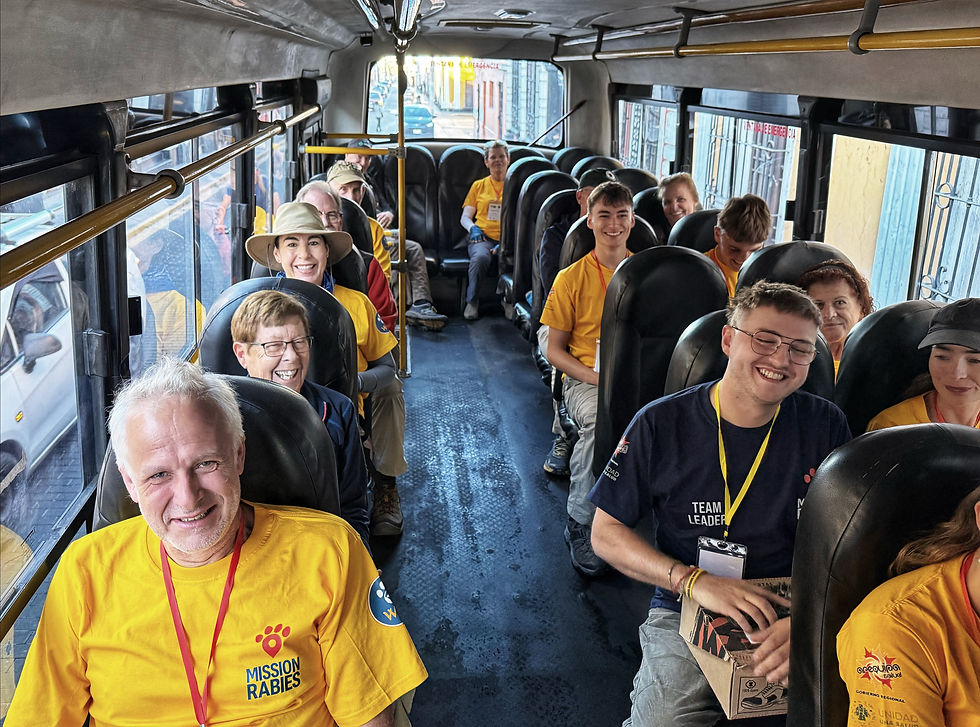
Armed with only the Spanish phrases in a little phrase book that we were given on bus ride to The Hub, plus a phrase I'd learned five minutes earlier from Paul, one of our Ecuadorian team leaders, I confidently greeted her with "Encantado de conocerte."
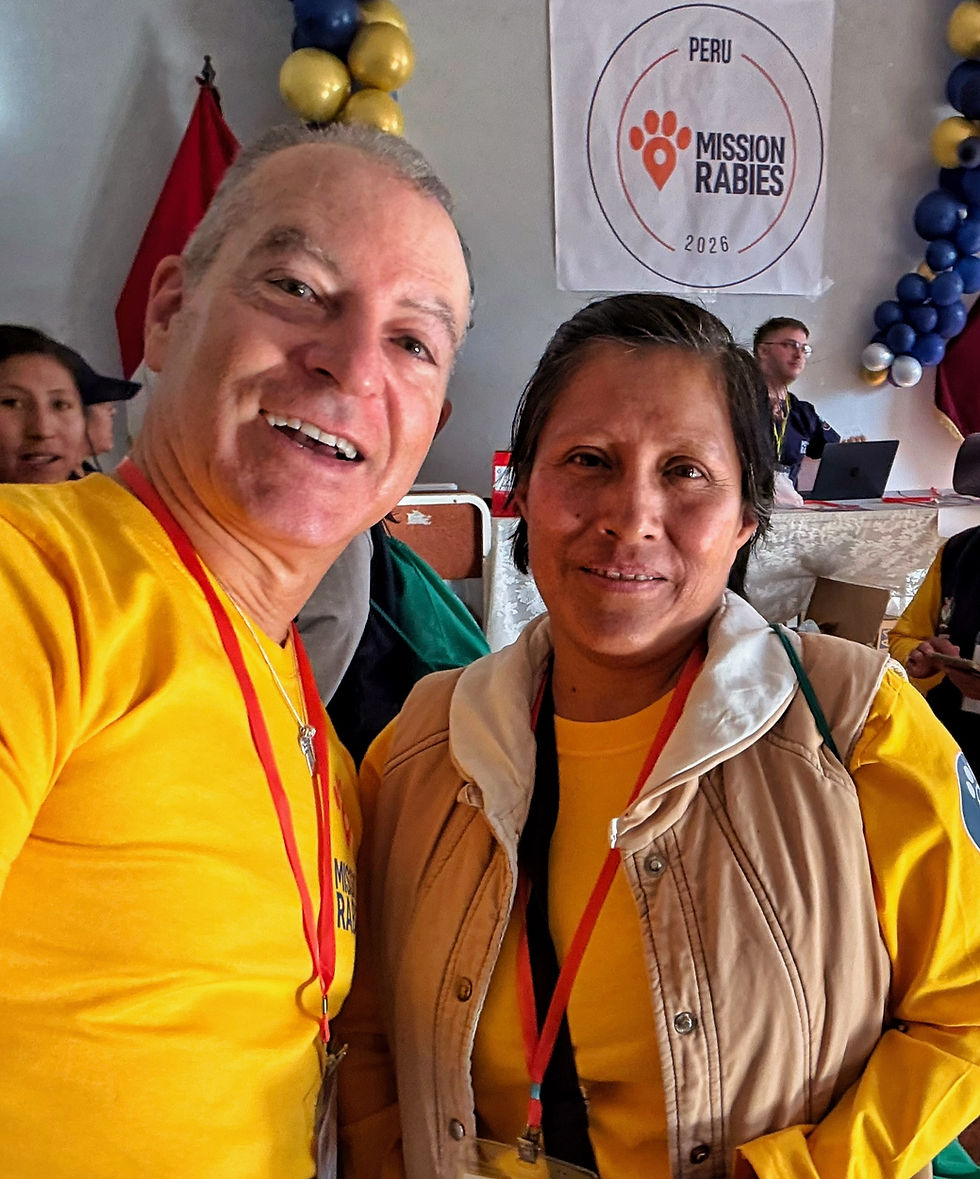
We both smiled. Then we both realized that was pretty much the end of our shared vocabulary. Thankfully, Google Translate exists. Communication problem solved. (Not really.)
The other team riding in our vehicle with us was Amber and her local partner Viviana. While we were waiting to leave, I pointed to the little badge hanging from my backpack that says, "We’re sorry our president is an idiot", along with a little American flag. I was going to interpret, but they saw the flag, the word president, and the word idiot, and burst out laughing. No translation was necessary. Just like that, the ice was broken. Who says Donald Trump doesn’t bring people together?

Our static vaccination point was set up on a quiet street corner beside a school, next to a bodega.
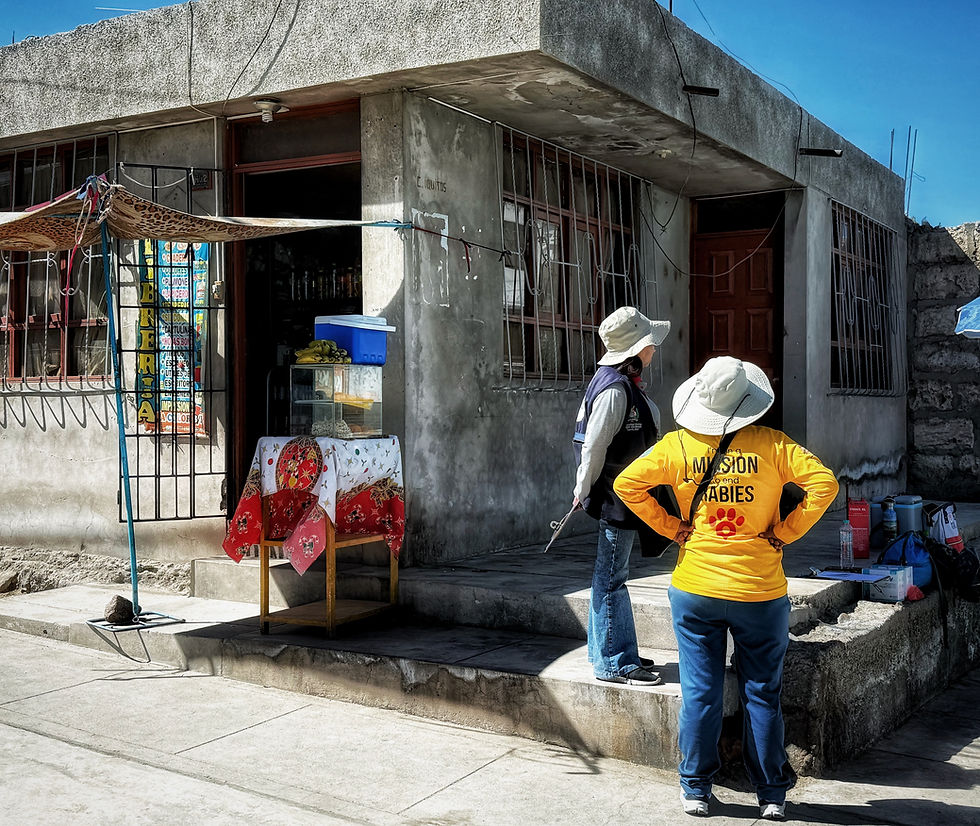
The owner of the bodega became our very first customer, bringing over her two dogs before we'd barely unpacked our supplies.
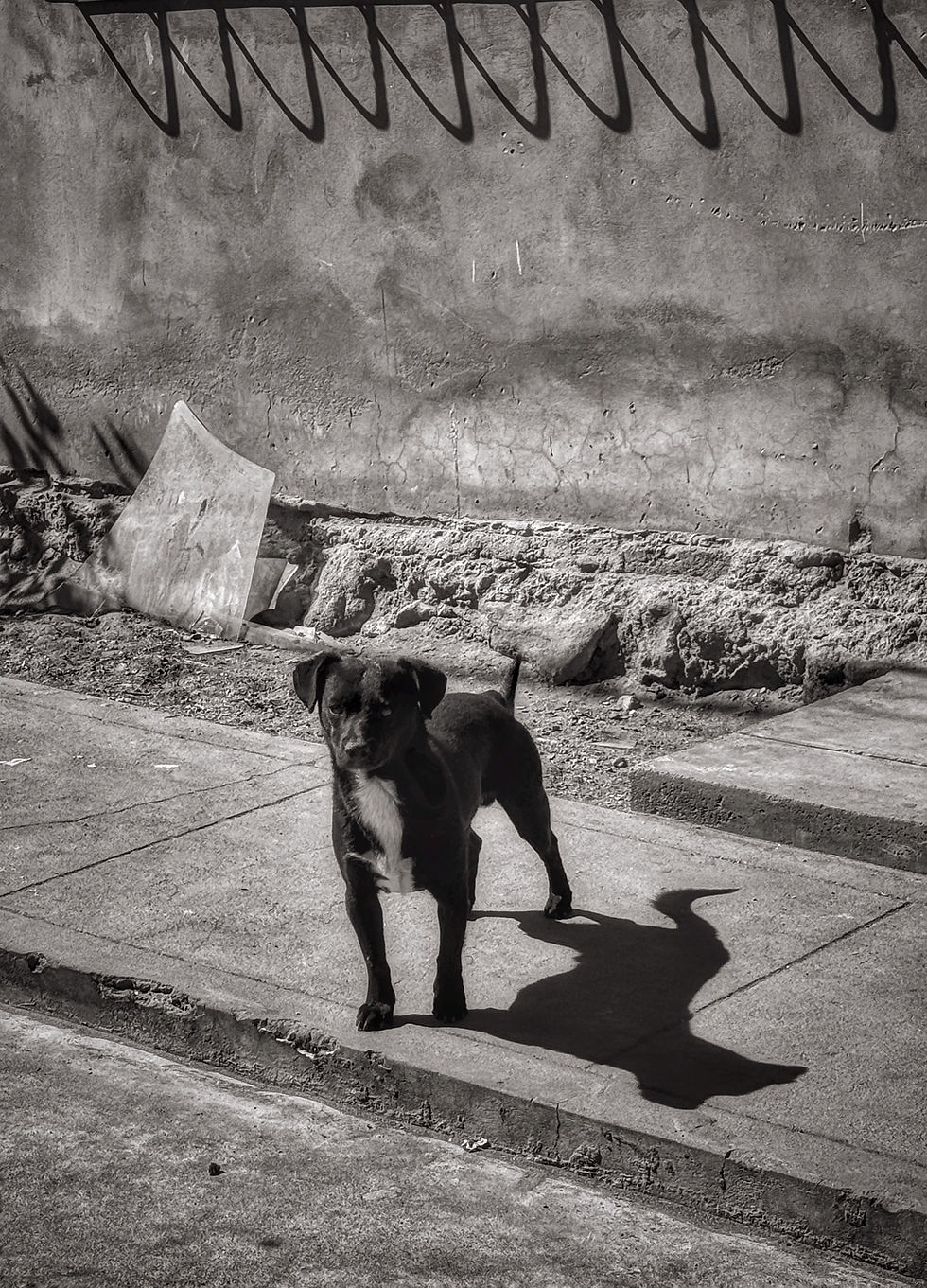
Then things got noisy. Like Tanzania, we use a megaphone with a prerecorded announcement inviting people to bring their dogs for free rabies vaccinations. Jessica switched it on, and it stayed on. At top volume. In an endless loop. For the past week I've had a song hopeless lodged in my brain, driving me absolutely crazy. (It’s Southern Cross, by Crosby, Stills & Nash, if you really need to know.) The megaphone cured that instantly.
The rest of the morning followed a familiar Mission Rabies pattern: chaos. Then silence. Then chaos. Then silence. Fifteen dogs would arrive almost simultaneously. Then nothing. Just as we'd decide it was finally time to pack up the static point and switch to door-to-door vaccinations, another owner would appear carrying two dogs.
So we'd stay. Then it would become quiet again. Then another dog would arrive.
Mission Rabies has taught me that dogs possess an uncanny ability to appear exactly when you've decided to leave.
Eventually we were joined by a representative from Peru's Ministry of Health, and after another few boring minutes with no dogs to vaccinate, we packed up the static clinic, opened the vaccination app, and began going door to door.
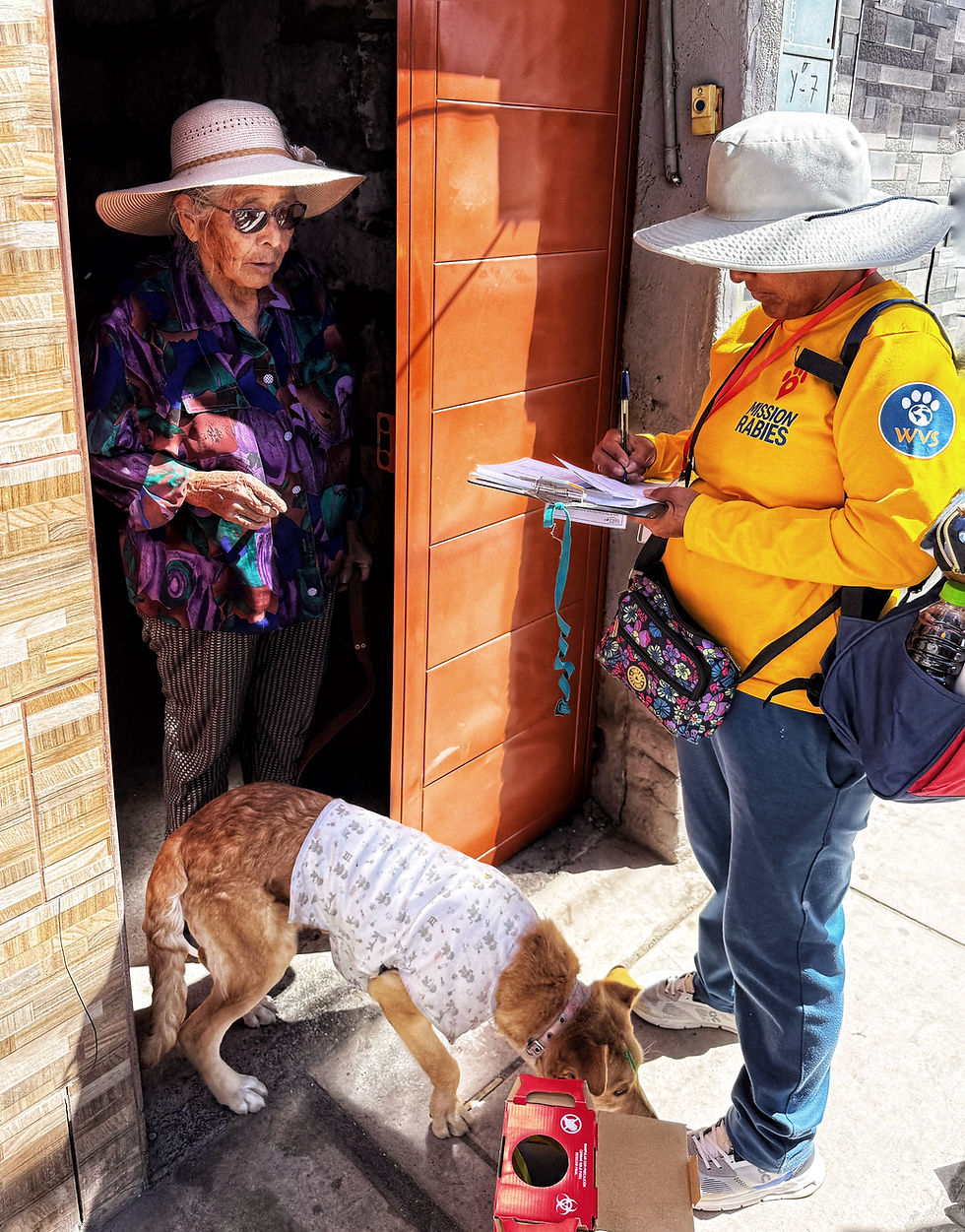
One of the biggest surprises today was the dogs themselves. In Tanzania and Ghana, most village dogs looked remarkably similar: short-haired, 40 lbs, brown. Peru put an end to that pattern.
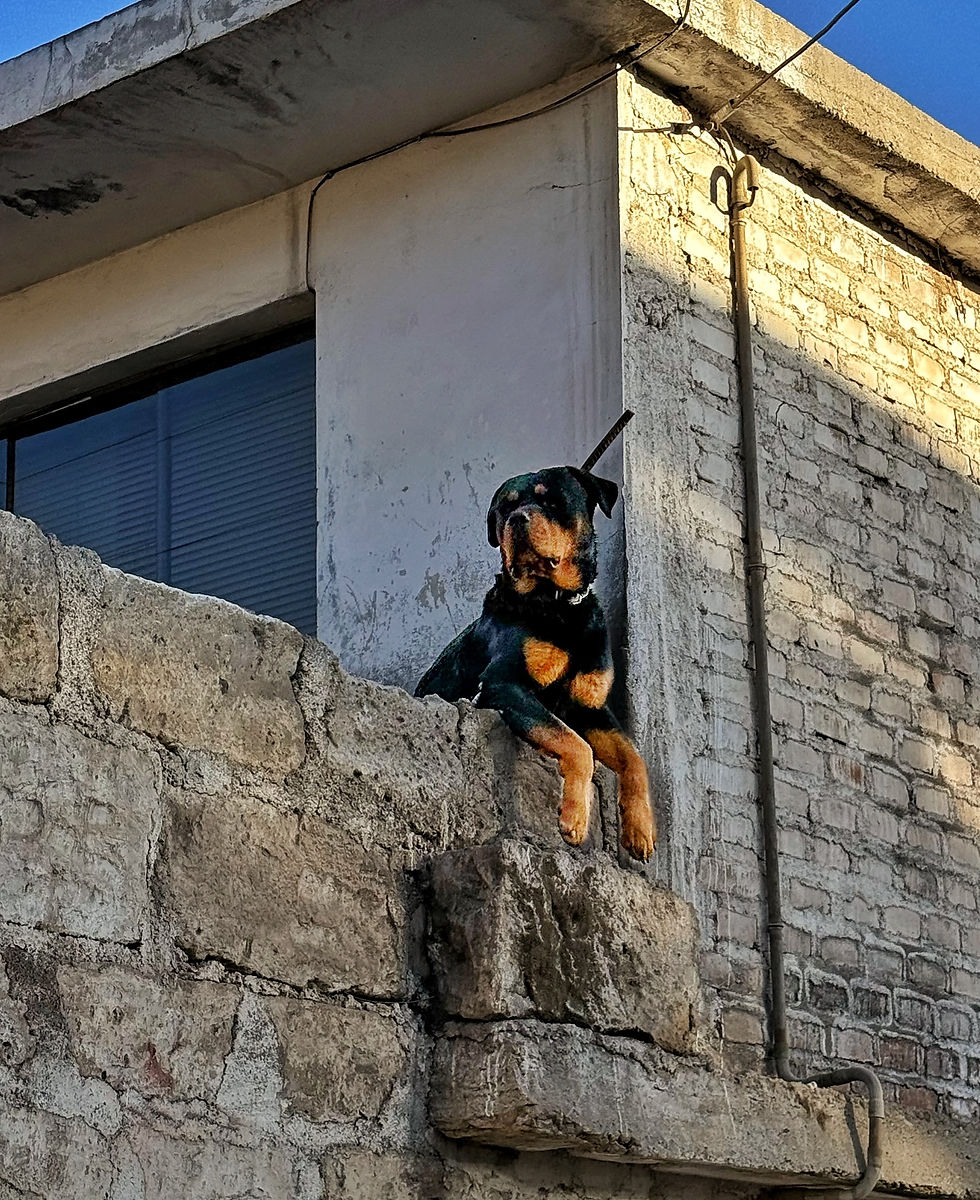
Today we vaccinated Chihuahuas, Pugs, Shar-Peis, Rottweilers, and Cocker Spaniels.


And, saving the best for last… several Peruvian Hairless Dogs..
Thankfully, I’d seen this breed before when I went to Machu Picchu four years ago, because if you've never seen this hideous creature before, you’d think you’ve encountered the world’s most severe case of mange.
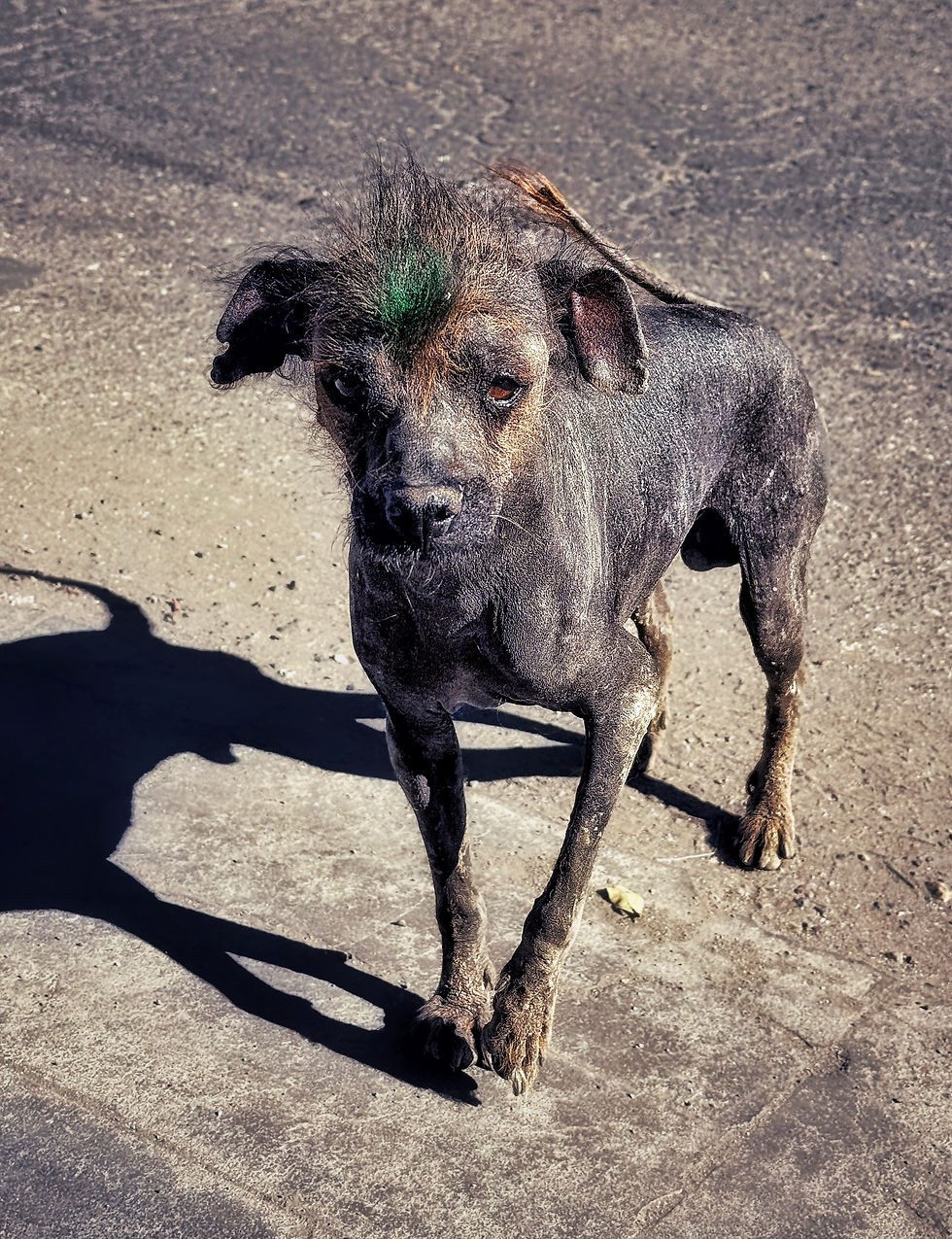
Fortunately, they were all perfectly healthy. I did feel slightly guilty marking these dogs with our green marker. When you've only got three hairs on your forehead to begin with, every one counts. (Trust me, I know.)
There were a few dogs that objected to the whole vaccination concept. That's when my years of veterinary experience kicked in. Running a feline-only veterinary hospital teaches you one very useful skill: how to administer an intramuscular injection before your patient even realizes what has happened. My lightning-fast jab technique worked beautifully today on a few less-than-cooperative dogs. The owners were impressed. The dogs were not amused.
One thing that really struck me was the difference between Peru and Africa. In Tanzania and Ghana, children were everywhere. They brought us dogs while their parents worked, followed us through neighborhoods, laughed, asked questions, and generally treated the strange white veterinarian as a fascinating novelty. Here, almost every dog was brought by an adult. The only children we saw were outside a nearby school as classes let out, and they barely gave us a second glance. I suppose that's because a white face isn't particularly unusual here. I have to admit, I kind of missed being a celebrity. Oh well. Get over it, Plotnick.
Nobody announced the official numbers before dinner, so I don’t know exactly how Condor 2 (my team) did compared to the others. Our team's goal was 75 vaccinations. Jessica and I vaccinated 92 dogs and 4 cats. Not a bad way to start Peru.
Let's see what tomorrow brings.


Comments