Silhouettes in Street Photography
- Arnold Plotnick

- May 12
- 3 min read
A useful tool, or a tedious trope?
In A Street Photography Manifesto, author Brian Lloyd Duckett flags silhouettes as a potential cliché—one of those go-to visual devices that can feel compelling at first glance but risk becoming repetitive. It’s a bit of a polarizing take, but I get what he’s saying.
A silhouette can be an easy formula: strong backlight, dark figure, clean outline. It looks dramatic, and it’s very easy to convince ourselves there’s more substance to the photo than there actually is.
Silhouettes work when the loss of detail actually adds something. When gesture, shape, or spatial relationships matter more than identity. When they emphasize mood, isolation, movement, or the way a person sits within a scene. In those cases, the silhouette isn’t just a look - it’s the point.
One way I sometimes think about it: if you strip away the silhouette effect, is there still a photograph there? If yes, the silhouette is probably enhancing it. If not, then the silhouette might just be doing all the heavy lifting.
Here are some examples from my personal files.

This photo of a diver, taken in Zanzibar, is a silhouette I’m genuinely happy with. The diver’s shape, which is pretty striking, is instantly readable, which gives the image a clear focal point. What really makes it work for me, though, is the spatial relationship between the two figures: one grounded, still, watching… the other suspended mid-air, seconds from hitting the water.
There’s also a subtle gesture in the foreground figure. You can’t see his expression, but the slight tilt of the head suggests something—curiosity, admiration, maybe even a hint of envy. It invites you to project a story onto the scene.
Most importantly, I think this image would still hold up without the silhouette. The silhouette isn’t a trick—it just simplifies and strengthens what’s already there.
And then there are the ones in my files that are admittedly flirting with “tropey-ness”.

This photo of the dog and owner at sunset is one I still like (I’m a veterinarian, so I basically like anything with a dog in it), but it leans into very familiar territory: clean silhouettes, golden light, a nice shape. It works, but it’s also the kind of image we’ve all seen variations of. If it holds your attention, it’s probably because of the relationship between the two figures, and not just the silhouette itself.
Same with this one of the kid and the cotton candy.

This one probably gets closest to what Duckett is warning about. The silhouette is clean, and the gesture is clear, but I can’t ignore the fact that it lives pretty comfortably in that familiar “sunset silhouette” formula. Without the cool gesture of the kid licking the cotton candy, I’m not sure it holds up as well. That’s usually my cue that the silhouette might be doing a bit too much of the heavy lifting.
Here are some of my better silhouette photos:
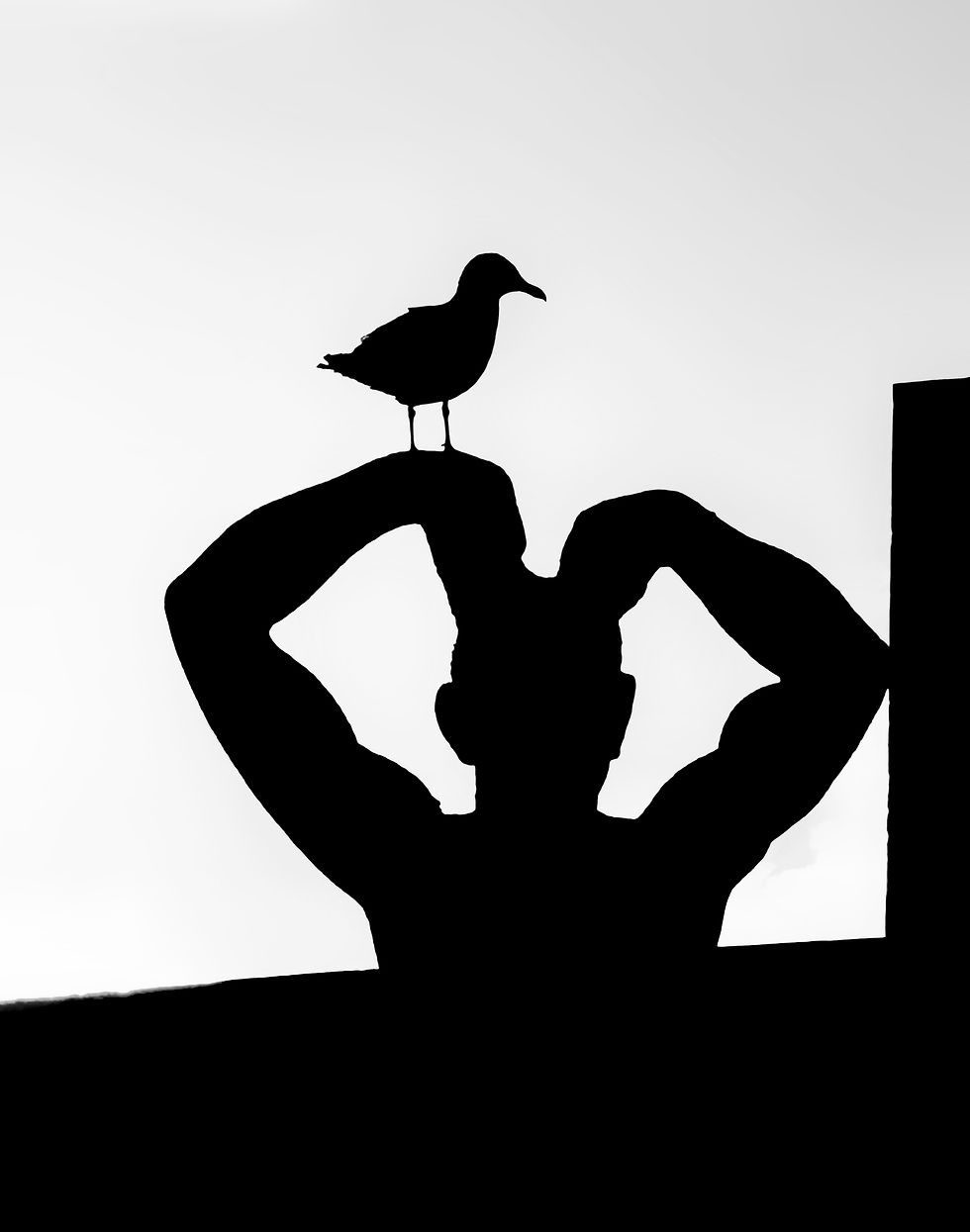
This photo, taken in Amsterdam, escapes trope territory because the silhouette is serving an idea, namely surprise, humor, and some visual ambiguity: is this a person? A statue? The graphic simplicity helps the joke land instantly. As I said above, silhouettes work best when they clarify shape and gesture.

This shot was taken in the Oculus building in New York City. Here, I'm using the silhouette as a compositional tool. The silhouette is almost secondary. The real subject is geometry, rhythm, and scale. The figure anchors the composition rather than merely existing as a dark shape. I was happy with this one.

This one is probably the most conceptually interesting of the bunch. The silhouette itself isn’t especially clean, which I think helps the image, oddly enough. The layered lines from the blinds create tension and fragmentation. It's less about the silhouette and more about graphic abstractation, with a human presence trapped inside it.
I try my best, when using silhouettes, to avoid the clichés, but every now and then I do succumb:

I was in Puerto Vallarta and saw these two guys fishing at sunset. Yes, it's a gorgeous sky. Yes, the horizon is clean, the human outlines are sharp, the reflections look cool. Is it pleasant? Sure. Is it memorable? Less so. This photo is a bit too close to the universal silhouette formula. It works aesthetically, but doesn't go much deeper emotionally and narratively.
A lot of silhouette photos are remembered for their design, but the best ones are remembered for their human moment. I'm a street photographer, and in street photography, that distinction matters. A clean outline may catch our attention for a second, but gesture, interaction, tension, humor, loneliness, curiosity — those are the things that actually stay with us.



Comments